How to Choose a Luxury Toilet: The Complete Buyer’s Guide (2026)
Choosing a luxury toilet is no longer just about appearance. In 2026, premium toilets combine advanced comfort, intelligent technology, refined design, and water efficiency. Whether you are renovating a modern bathroom or designing a high-end home, selecting the right luxury toilet can significantly improve both daily comfort and long-term value.
This complete guide explains how to choose a luxury toilet, step by step, so you can make an informed and confident decision.
What Makes a Toilet “Luxury”?
A modern luxury toilet designs differs from a standard toilet in several key ways:
- Superior materials and craftsmanship
- Elegant, modern design with clean lines
- Advanced comfort and hygiene features
- Quiet, efficient flushing systems
- Long service life and premium finishes
Luxury toilets are designed to be used daily while maintaining a refined aesthetic, making them a functional centerpiece rather than a hidden utility.
Step-by-Step: How to Choose a Luxury Toilet
Time needed: 15 minutes
A step-by-step guide to choosing the right luxury toilet for design, comfort, and efficiency.
- Measure Your Bathroom and Rough-In Distance
Measure your bathroom carefully, including the rough-in distance (typically 10″, 12″ or 16″), available wall space, and floor clearance. Accurate measurements ensure the luxury toilet will fit correctly and install without issues.
- Choose Wall-Mounted or Floor-Mounted Design
Decide whether a wall-mounted or floor-mounted luxury toilet best suits your bathroom layout and design style. Wall-mounted models offer a minimalist look, while floor-mounted toilets provide a more traditional installation.
- Select Smart Features and Comfort Options
Consider linking smart features such as integrated bidet functions, heated seats, soft-close lids, LED displays, and touchless flushing. Choose features that add real daily comfort and hygiene benefits.
- Check Flush Technology and Water Efficiency
Look for efficient dual-flush or low-consumption flushing systems that provide strong performance while reducing water usage. Modern luxury toilets balance power with sustainability.
- Match Design and Finish to Your Bathroom
Choose a toilet design and finish that complements your basin, tiles, and overall bathroom aesthetic. Clean lines and premium porcelain finishes are popular in modern luxury bathrooms.
- Confirm Installation and Maintenance Requirements
Verify plumbing compatibility, electrical needs for smart toilets, and long-term maintenance requirements. Proper installation ensures reliable performance and longevity.
Wall-Mounted vs Floor-Mounted Luxury Toilets: Which Is Better?
There is no universal “best” option — the right choice depends on your space and preferences.
| Feature | Wall-Mounted | Floor-Mounted |
|---|---|---|
| Visual style | Ultra-modern | Classic to modern |
| Floor cleaning | Very easy | Standard |
| Installation | More complex | Simpler |
| Design flexibility | High | Moderate |
Both wall-mounted and floor-mounted options are available within our luxury toilet styles for modern bathrooms, allowing flexibility in design and installation.

Are Luxury Toilets Water-Efficient?
Yes. Many luxury toilets are designed with advanced water-saving technology.
Benefits include:
- Lower water usage
- Efficient dual-flush systems
- Compliance with modern sustainability standards
Luxury no longer means waste — it means smart efficiency combined with comfort.
How Long Do Luxury Toilets Last?
With proper installation and care, a luxury toilet can last decades.
Reasons include:
- High-grade porcelain
- Durable internal components
- Precision manufacturing
This makes luxury toilets a long-term investment rather than a short-term upgrade.
Common Mistakes to Avoid When Choosing a Luxury Toilet
Avoid these frequent issues:
- Choosing design before measuring space
- Ignoring rough-in distance
- Overlooking installation requirements
- Selecting features you don’t actually need
A well-chosen luxury toilet should balance design, comfort, and practicality.
Final Thoughts: Choosing the Right Luxury Toilet
A luxury toilet should:
- Fit your space perfectly
- Match your bathroom’s design language
- Offer meaningful comfort features
- Operate efficiently and quietly
- Remain timeless for years to come
By following this guide, you can confidently select a luxury toilet that enhances both daily living and overall property value.
Explore Luxury Toilets
Browse our curated collection of luxury toilets for modern bathrooms, designed to combine advanced technology, refined design, and long-term durability.
Top selling luxury toilets
-

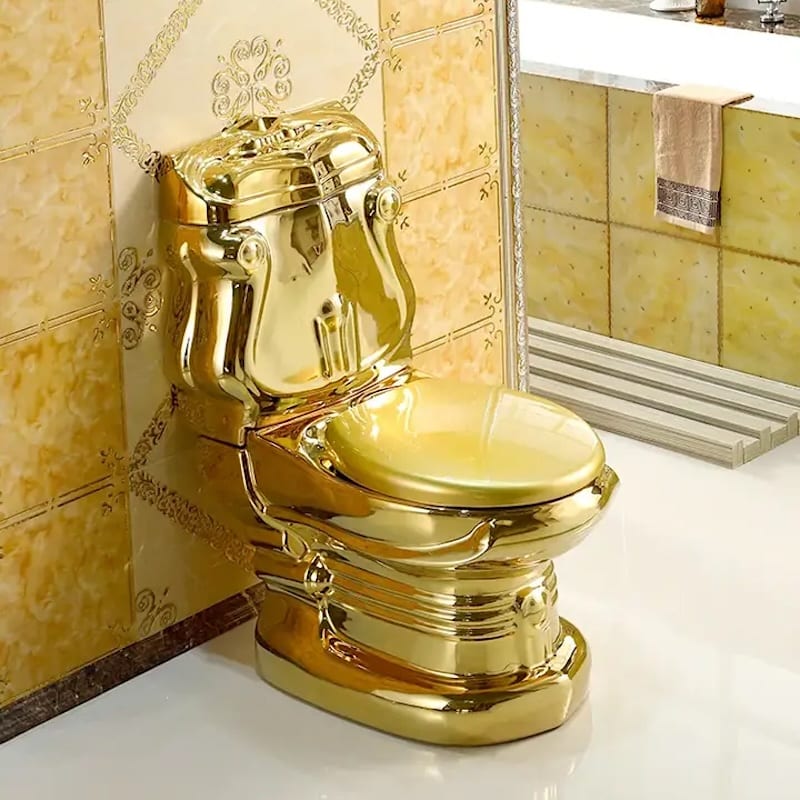
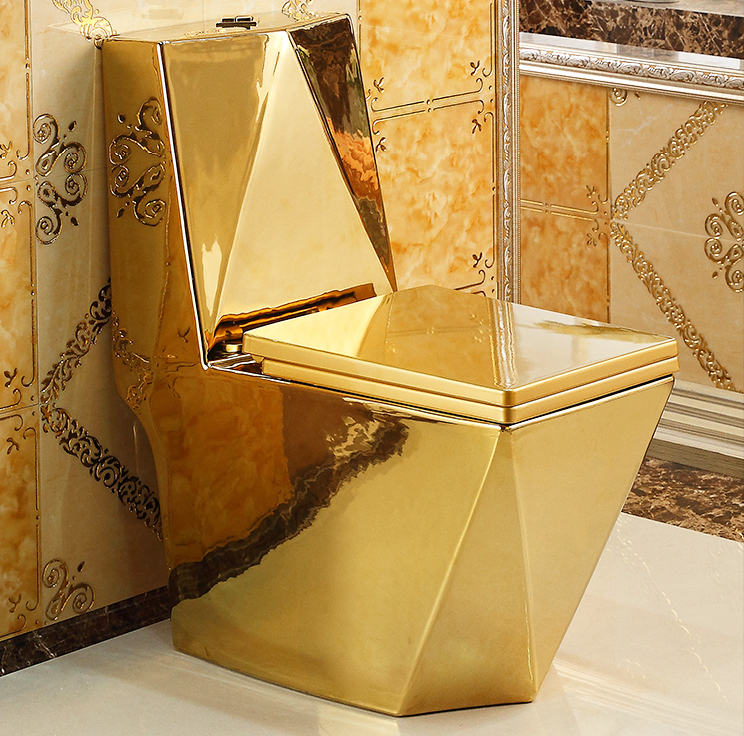
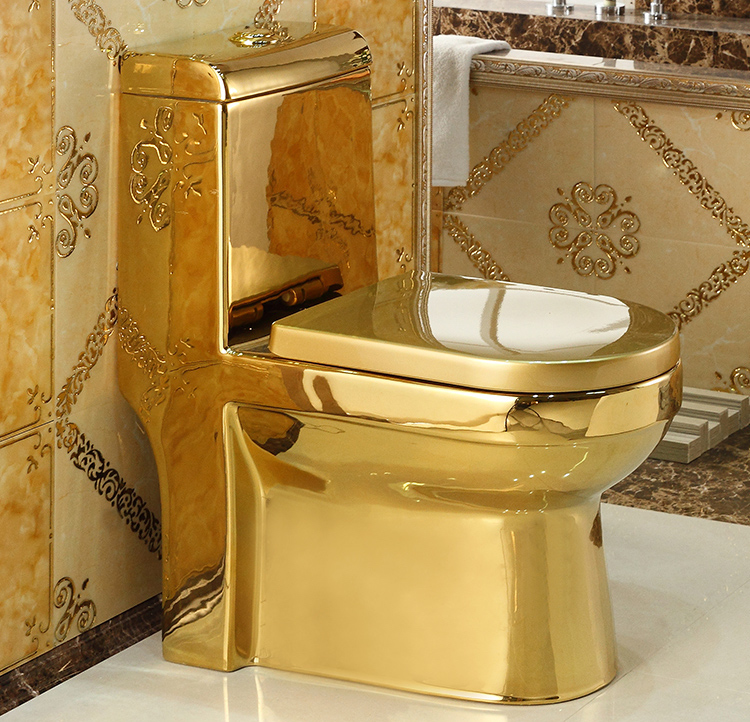
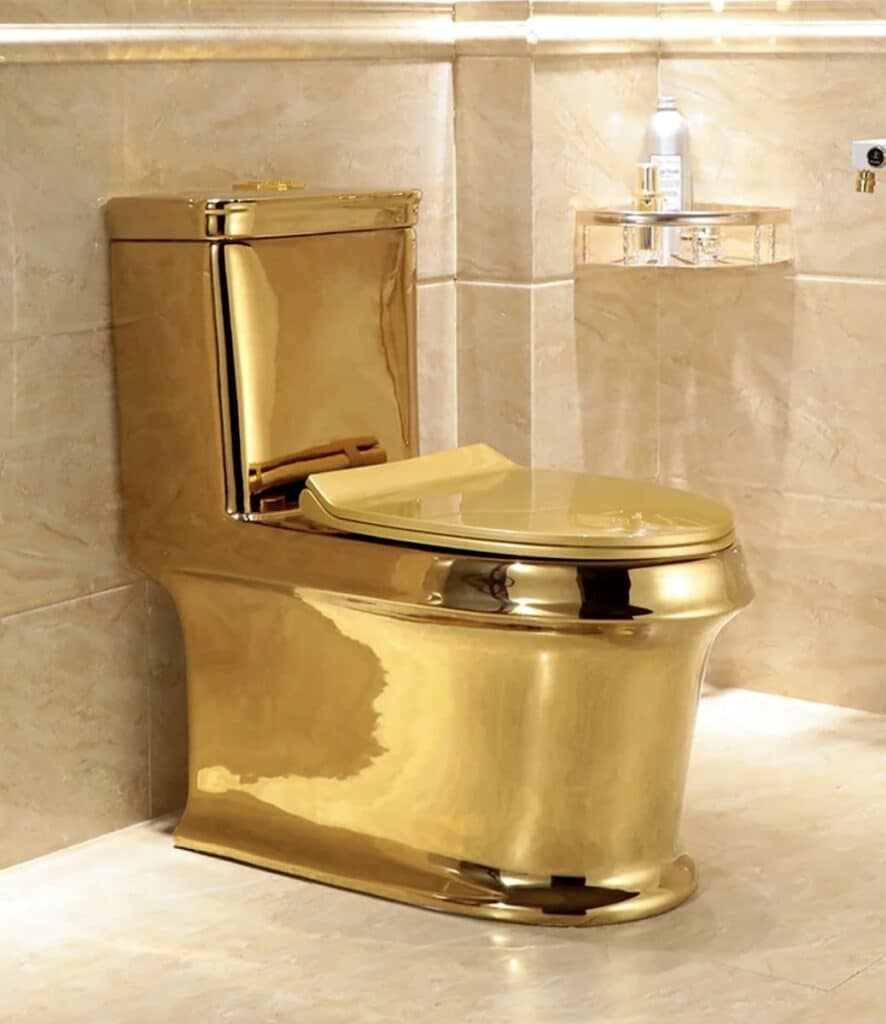
Royal Plain Gold Toilet
$2,425.00 -

Angular Plain Gold Toilet
$2,499.00 -

Deluxe Plain Gold Toilet
$2,249.00 -

Classic Plain Gold Toilet
$2,199.00
Luxury toilets offer superior materials, refined design, enhanced comfort features, and advanced flushing technology. They are designed for long-term durability, efficiency, and elevated daily use.
Yes. Smart toilets improve hygiene and comfort through features such as bidet functions, heated seats, and touchless operation. Many models also reduce water usage, making them both practical and luxurious.
Wall-mounted luxury toilets require a concealed frame and in-wall cistern. Installation is more complex than floor-mounted toilets, but the result is a cleaner design and easier floor maintenance.
Most modern luxury toilets use efficient dual-flush systems that consume less water per flush than older standard toilets, while maintaining strong performance.
Yes. High-quality bathroom upgrades, including luxury toilets, can increase perceived home value and appeal, especially in modern or high-end properties.
With proper installation and care, a luxury toilet can last several decades due to high-quality porcelain and durable internal components.